.png)
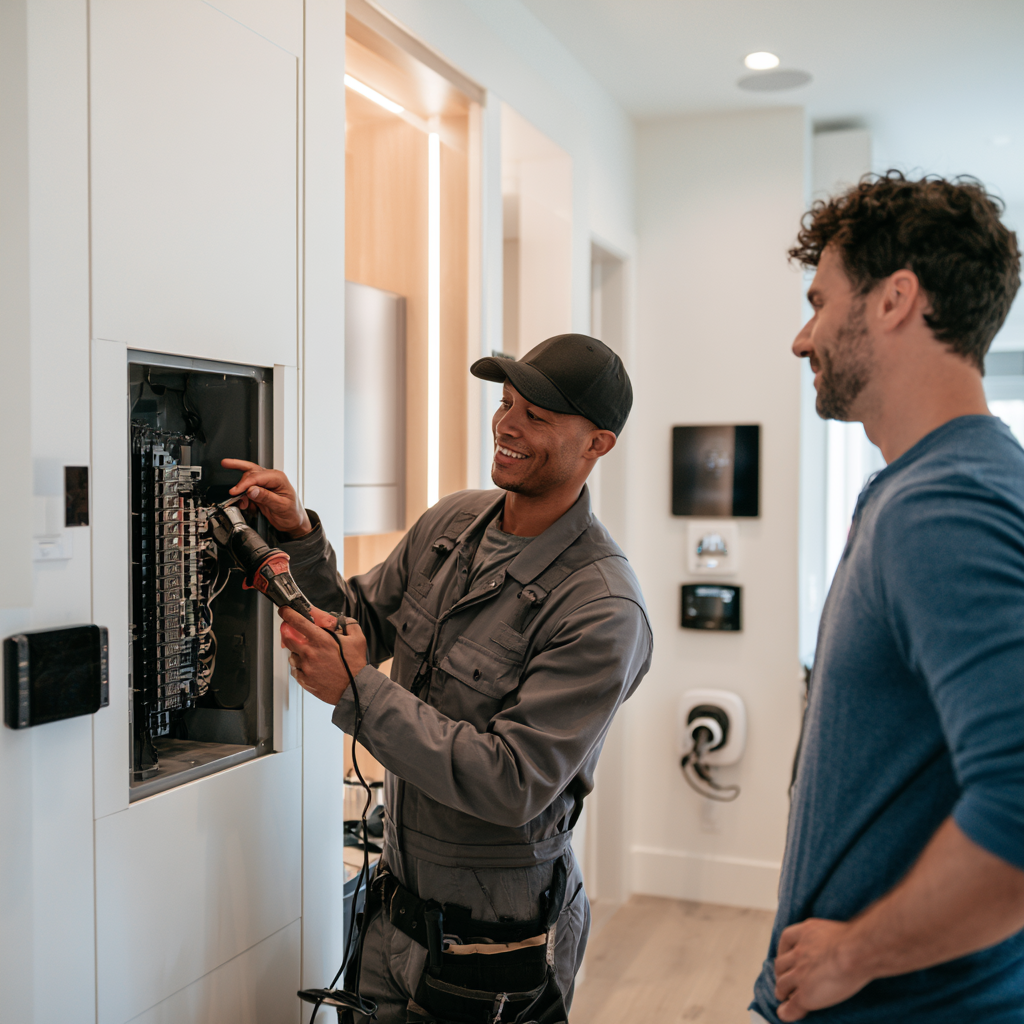
Your electrical panel is the control center of your home’s power supply. It receives electricity from your local utility provider and distributes it safely through individual circuits to power your lights, appliances, and devices.
While electrical panels are built to last, they don't last forever. Older panels simply weren't built to handle the heavy demands of modern living—from electric vehicles and heat pumps to high-end kitchen appliances and home offices. Running a modern household on an outdated electrical panel isn't just an inconvenience; it can be a serious safety hazard.
Here are 8 clear signs that it’s time to upgrade your home’s electrical panel.
Electrical panels typically have a lifespan of 25 to 30 years. If your home was built in the 1990s or earlier and has never had a service upgrade, your panel is likely reaching or past its intended service life. Aging components inside the panel can corrode, loosen, or wear out, leading to unsafe voltage drops, unexpected power cuts, or electrical fires.
If you have to screw in glass fuses instead of flipping a circuit breaker switch when a line trips, your panel is severely outdated.
Fuse boxes were common in homes built before the 1970s and were typically designed for 30-amp to 60-amp electrical service. Today’s standard modern home requires at least 100-amp to 200-amp service. Modern insurance companies often refuse to insure homes with active fuse panels until they are upgraded to a modern breaker system.
While an occasional tripped breaker means the system is protecting you from an overload, breakers that trip constantly point to a deeper issue. If running a microwave and a hair dryer at the same time cuts power to a room every week, your panel can no longer keep up with your household’s total electrical load.
Are you planning a kitchen renovation, installing a hot tub, or adding any of the following high-draw electrical loads?
Adding high-wattage equipment to an existing 100-amp (or lower) panel without a service upgrade can overload your main system, leading to flickering lights and continuous tripping.
Do your lights flicker or momentarily dim whenever the refrigerator compressor kicks in or your furnace turns on? This is a sign of voltage drop. Your panel is struggling to supply the immediate burst of power demanded by larger motor-driven appliances, drawing electricity away from lighter circuits like your lighting.
Your electrical panel should always operate quietly and feel cool to the touch. Pay attention to these critical warning signs near your panel or outlets:
If you notice any of these symptoms, turn off your main power breaker if it is safe to do so, and call an emergency electrician immediately.
If your walls lack sufficient outlets, forcing you to use power strips, daisy-chained extension cords, and multi-plug adaptors in every room, your panel is likely under-serviced. Extension cords are a temporary fix—not a permanent wiring solution. Upgrading your electrical panel allows a certified electrician to safely add dedicated circuits and install additional wall outlets where you need them most.
Certain electrical panels installed between the 1950s and 1980s have documented design flaws where breakers fail to trip during an overload condition—creating extreme fire hazards.
Upgrading from an older service to a modern 200-amp panel gives you:
Never attempt to inspect or replace internal panel wiring on your own. Main service lines carry high-voltage electricity even when individual breakers are off. If you suspect your home’s electrical panel needs an upgrade, contact a licensed, certified electrician to perform a safety assessment and ensure your home stays protected.
.png)
.png)