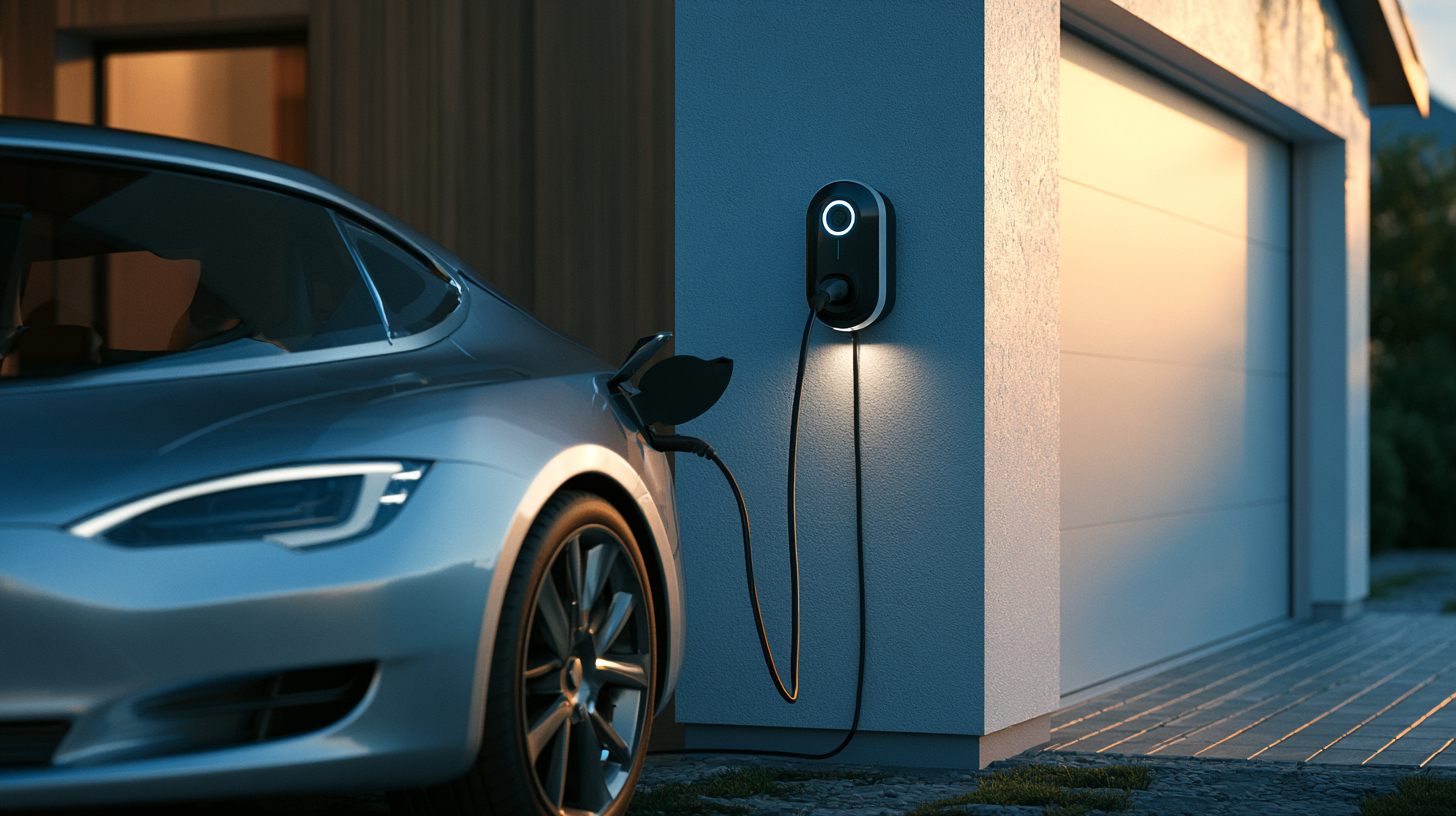
Making the switch to an electric vehicle (EV) is an exciting move toward cleaner transportation and lower fuel costs. While public charging infrastructure continues to expand, over 80% of EV charging happens right at home.
Plugging your vehicle into a standard wall outlet can take a full day or more to replenish your battery. To get the most convenience out of your EV, installing a dedicated Level 2 home charging station is essential.
Before purchasing a charger, here is everything you need to know about charging levels, home electrical requirements, costs, and installation steps.
1. Understanding Charging Levels: Level 1 vs. Level 2
When charging at home, you have two primary options:
Level 1 Charging
- Power Source: Plugs into a standard 120V household wall outlet.
- Charging Speed: Adds roughly 3 to 5 miles (5 to 8 km) of driving range per hour.
- Full Charge Time: Takes anywhere from 24 to 40+ hours for a full battery charge.
- Installation Need: Requires no special equipment or electrical installation.
Level 2 Charging
- Power Source: Uses a dedicated 240V circuit (similar to what powers a heavy-duty clothes dryer or electric stove).
- Charging Speed: Adds roughly 25 to 40+ miles (40 to 65 km) of driving range per hour.
- Full Charge Time: Takes just 4 to 8 hours for a full charge, ideal for overnight charging.
- Installation Need: Requires professional electrical installation by a certified electrician.
Note: DC Fast Chargers (Level 3) require commercial high-voltage infrastructure and are not suitable for single-family residential installation.
2. Electrical Panel Capacity: Can Your Home Handle It?
Installing a Level 2 EV charger requires a dedicated 240V circuit, typically drawing between 30 to 50 amps of continuous load.
Before buying a charger, you must assess your home’s electrical service capacity:
- 100-Amp Panels: Many older homes have a 100-amp electrical service. Adding a 40-amp or 50-amp charger onto a 100-amp panel that already powers an electric stove, dryer, or air conditioner may cause frequent breaker trips or main panel overloads.
- 200-Amp Panels: Homes with modern 200-amp electrical panels generally have sufficient capacity to support a Level 2 charger without major power management issues.
What if your panel is maxed out?If your panel lacks capacity, you don't necessarily need an expensive full electrical service upgrade right away. An electrician can install an Energy Management Device (DCC / Load Shedder) that monitors household power consumption and automatically pauses EV charging whenever total household demand spikes (such as when the oven and heat pump are running simultaneously).
3. Hardwired vs. Plug-In Chargers
When buying a Level 2 EV charger, you will choose between two primary installation styles:
Plug-In Chargers (NEMA 14-50 or 6-50 Outlet)
- Pros: Easy to unplug and take with you if you relocate; simpler to replace if the unit ever fails.
- Cons: Requires installing a heavy-duty commercial-grade GFCI outlet; electrical codes limit maximum charging speeds to 40 amps for plug-in units.
Hardwired Chargers (Directly Connected)
- Pros: Allows for higher charging speeds (up to 48 to 80 amps if your service supports it); cleaner wall installation with no visible wall plug; weatherproof for outdoor mounting.
- Cons: Requires a licensed electrician to safely disconnect or move the unit.
4. Key Factors to Consider Before You Buy
- Cable Length: Standard charger cables range from 18 to 25 feet. Park your vehicle in your garage or driveway where you plan to charge and measure the distance to the mounting site, making sure the cord won't present a tripping hazard or require stretching.
- Smart Chargers vs. Basic Chargers: Smart chargers connect to Wi-Fi, allowing you to track real-time energy usage, schedule charging during off-peak electricity rate hours, and control settings from a smartphone app.
- Indoor vs. Outdoor Rating: If you plan to mount the charger outside on an exterior wall or driveway post, verify that the unit carries a NEMA 3R or NEMA 4 weather-resistance rating.
5. Rebates and Financial Incentives
Governments and local utility providers frequently offer financial incentives to encourage residential EV charger adoption:
- Utility & Regional Rebates: Many provinces, states, and municipalities offer rebates covering up to 50% of purchase and installation costs (often $350 to $700+) for eligible ENERGY STAR® certified Level 2 chargers.
- Multi-Family Incentives: Condo boards and apartment buildings often qualify for higher multi-unit residential building grant programs.
Be sure to check local rebate guidelines before purchasing—most programs require the installation to be completed by a licensed electrical contractor.
6. Why Professional Installation is Mandatory
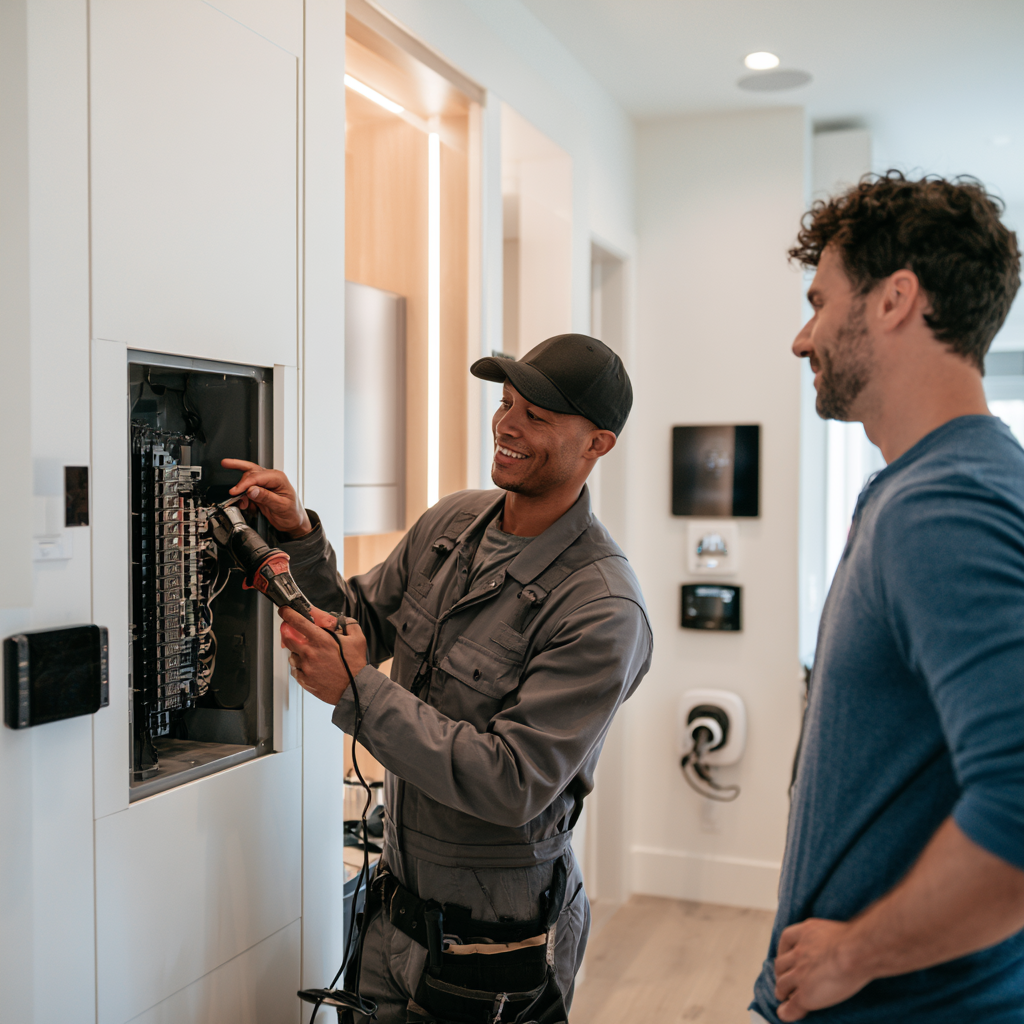
EV charging is a continuous high-load draw, meaning the circuit operates near maximum capacity for hours at a time. Improper DIY installations pose severe risks of electrical fire, melted wall receptacles, or voided vehicle warranties.
A licensed electrician will:
- Perform a detailed load calculation on your main panel.
- Pull all necessary electrical permits required by your local municipality.
- Install the correct wire gauges, heavy-duty breakers, and proper grounding systems.
- Provide official safety documentation required for utility rebate claims.
Ready to Charge at Home?
Installing a Level 2 EV charger turns your garage or driveway into a convenient, private fuel station. If you're ready to make the switch, contact a certified electrician to assess your panel capacity and get a professional installation quote today!

.png)
.png)