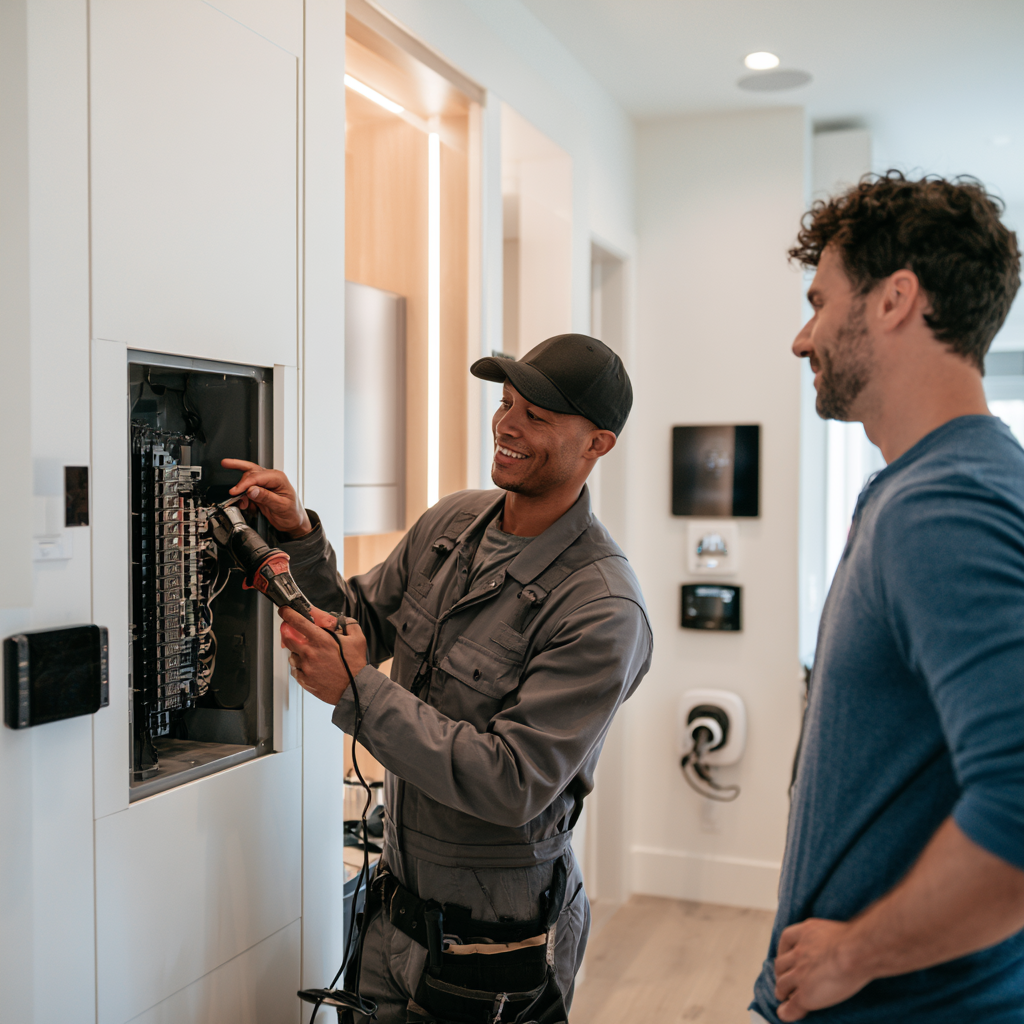
Why You Should Never DIY Electrical Work

By
Mighty Power Electrical LTD
18 Mar 2026
5 min read
Share this post

With endless home improvement tutorials available online, taking on a DIY project can be tempting. Tiling a backsplash, painting a room, or building custom shelves are great ways to save money and add personal touch to your home.

However, electrical work is not a standard DIY project.

While a mistake in painting just looks bad, a mistake in electrical wiring can lead to catastrophic property damage, severe injury, or worse. Here is why you should always leave electrical repairs, installations, and upgrades to certified Red Seal electricians.

1. The Hidden Risk of Electrocution and Severe Shock

Working with residential electricity carries inherent risks. Standard Canadian household voltage ($120\text{V}$ to $240\text{V}$) carries more than enough current to cause:

  • Severe thermal burns to skin and internal tissue
  • Cardiac arrest or dangerous heart arrhythmias
  • Involuntary muscle contraction (causing you to "freeze" onto a live conductor)
  • Traumatic falls caused by sudden muscle jerks while working on ladders

Professional electricians spend years in apprenticeships learning strict safety protocols, live-circuit testing procedures, and specialized isolating techniques to prevent accidental contact with energized conductors.

2. High Risk of Hidden Fire Hazards

One of the most dangerous aspects of DIY electrical work is that a mistake might not fail immediately. A circuit can appear to work perfectly for weeks or months, all while quietly developing extreme heat behind your drywall.

Common DIY wiring mistakes that cause fires include:

  • Improper Wire Gauge: Using a wire size that is too small for the circuit's amperage causes the wire to overheat under heavy loads.
  • Loose Terminal Connections: Loose wire connections create electrical arcing—microscopic sparks jumping across gaps that can reach temperatures over $1,000^\circ\text{C}$ ($1,800^\circ\text{F}$).
  • Overcrowded Junction Boxes: Stuffing too many wires into an electrical box pinches insulation and traps heat.
  • Incorrect Junction Splices: Joining wires without proper junction boxes or approved wire connectors.

According to national fire safety statistics, faulty wiring and electrical malfunctions are among the leading causes of residential fires every year.

3. Voided Homeowner Insurance Coverage

If a fire or structural damage occurs due to unpermitted, DIY electrical work, your home insurance provider has grounds to deny your claim entirely.

Insurance adjusters investigate the origin of electrical fires. If they discover that non-compliant wiring was installed without proper municipal permits or by an uncertified individual, you could be left personally responsible for hundreds of thousands of dollars in property damage and liability claims.

4. Complex Building Codes and Permit Requirements

Electrical installations in Canada must comply with the strict regulations of the Canadian Electrical Code (CEC), along with local provincial and municipal building codes.

Codes exist to ensure safety, regulating everything from:

  • Proper GFCI and AFCI breaker protection
  • Wire routing distances from framing edges
  • Junction box volume calculations
  • Correct grounding and bonding paths

Licensed electrical contractors handle the permitting process from start to finish, ensuring that all work is officially inspected and fully compliant with current safety regulations.

5. Unexpected System Vulnerabilities

Electricity in a home operates as an interconnected network. Modifying one circuit without understanding the overall load balance can create unexpected vulnerabilities elsewhere:

  • Adding outlets to an already maxed-out branch circuit can cause frequent breaker trips.
  • Improperly tapping into a multi-wire branch circuit can overload neutral wires, destroying sensitive electronics.
  • Mixing copper and legacy aluminum wiring without specialized anti-oxidant compounds and rated connectors creates severe oxidation and heat buildup.

Certified electricians don't just fix a single outlet; they evaluate how the modification impacts your entire electrical panel and service capacity.

6. The Real Cost of "Saving Money"

Many homeowners attempt DIY electrical work to save money on labor fees. However, DIY electrical often costs significantly more in the long run:

  • Corrective Repairs: Electricians frequently have to undo unsafe DIY wiring before performing proper installations, doubling the labor required.
  • Damaged Equipment: Incorrect wiring can instantly short out expensive HVAC systems, kitchen appliances, or home electronics.
  • Failed Inspections during Home Sales: When selling your home, a professional home inspector will flag non-compliant DIY electrical work, leading to delayed closing sales or mandatory price reductions.

What Electrical Work is Safe for Homeowners?

To keep your home safe, restrict your DIY activities to simple, non-wired tasks:

  • Replacing decorative switch plates or faceplates (without touching the internal wiring)
  • Changing standard light bulbs or light shades
  • Testing and resetting GFCI outlets or circuit breakers
  • Plugging in surge protectors and appliances

Summary: Leave High Voltage to the Pros

When it comes to your home's infrastructure, safety should always come first. Hiring a certified, licensed, and bonded electrician guarantees that your electrical system is reliable, safe, and up to code—giving you complete peace of mind.

Mighty Power Electrical Services LTD
As a trusted electrical services contractor serving the Lower Mainland, Mighty Power Electrical Services specializes in providing reliable and efficient solutions for both residential and commercial clients.
Thank you! Your submission has been received!
Oops! Something went wrong while submitting the form.

Latest blog posts

10 Signs Your Home Has an Electrical Problem You Shouldn't Ignore

A guide identifying critical warning signs of faulty wiring to help homeowners recognize hazards before they become dangerous emergencies.

Read post

15 Electrical Mistakes Homeowners Should Never Make

A breakdown of 15 common wiring and maintenance blunders that pose severe fire or shock risks, and how to avoid them.

Read post

Why Does My Circuit Breaker Keep Tripping? Common Causes and Solutions

A quick breakdown explaining circuit overloads, short circuits, and ground faults, along with how to safely address them.

Read post